

Substack vs Medium: What’s the Difference? Which is Better for You?
Substack and Medium: What Writers Need to Know


If you’re thinking about writing and publishing content online, you’ve probably heard of Substack and Medium. Both are popular platforms for writers, but they work in different ways. Choosing the right one can affect how you reach readers and make money. In this post, we’ll look at the key differences between Substack and Medium. By the end, you’ll have a clearer idea about which platform fits your needs.
What is Substack?
Substack is a newsletter platform that lets writers send emails directly to subscribers. You can write essays, newsletters, or updates and build a community of readers. Many use Substack to create paid newsletters, where subscribers pay a fee to get premium content.
Key features of Substack:
Email-based publishing
Paid subscription options
Simple setup with no tech skills needed
Direct relationship with your audience
Built-in payment processing
Substack works well for writers who want cotrol over their audience. Since it’s email-focused, your readers get your content straight in their inbox. That can lead to stronger connections.
What is Medium?
Medium is an online publishing platform where writers post articles for free or for Medium’s Partner Program. It’s more like a traditional blog, but with a built-in audience. Medium curates content and promotes stories to people based on their interests.
Key features of Medium:
Easy publishing platform with editing tools
Access to a large, built-in audience
Medium Partner Program pays writers based on reader engagement
No fee to start writing
Articles appear in search results and get social sharing

Medium works well if you want to focus on writing and let the platform handle discovery. Readers find your stories through Medium’s homepage, newsletters, and recommendations.
Substack vs Medium: Main Differences
1. How You Reach Readers
Substack sends content directly via email to your subscribers.
Medium displays your articles on its website and app, relying on search, social sharing, and its recommendation engine.
If you want a direct line to readers, Substack is better. If you want to tap into an existing network of readers, Medium has you covered.
2. Monetization
Substack lets you charge readers with paid subscriptions. You keep most of the revenue (after payment fees).
Medium pays writers through the Partner Program, which shares membership fees based on reading time and engagement.
Substack offers clear, upfront ways to make money. Medium’s earnings depend on how well your stories perform under its program.
3. Content Ownership and Control
Substack gives you full control over your email list and content.
Medium hosts your content on their platform. You don’t own the mailing list.
For ownership and independence, Substack is the stronger choice.
4. Publishing Format
Substack mainly supports newsletters via email.
Medium focuses on web-based articles and stories.
If you prefer to write newsletter-style updates, go with Substack. If you like long-form articles published online, Medium suits you better.
5. Audience and Discoverability
Substack relies on your ability to grow and maintain your subscriber list.
Medium helps new readers discover your content via homepage features, tags, and search.
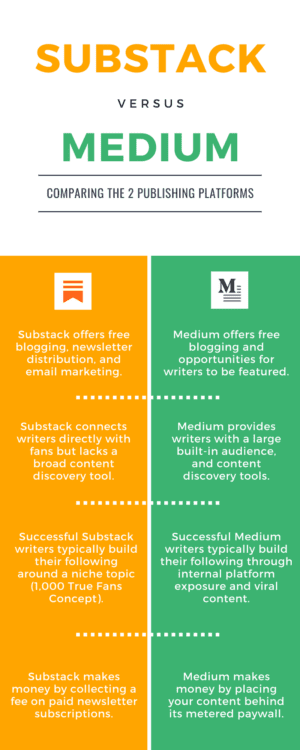
Medium might help you get found faster. Substack’s growth depends more on your marketing efforts.
Who Should Use Substack?
Substack is ideal if:
You want to build a mailing list.
You plan to offer paid subscriptions.
You want complete control over your content and reader data.
You enjoy writing newsletters or regular updates by email.
Many journalists, experts, and niche writers use Substack to connect with loyal followers and earn income from subscriptions.
Who Should Use Medium?
Medium is a better fit if:
You want to reach a large audience without upfront costs.
You prefer publishing web articles over newsletters.
You want to join a community of writers.
You’re okay with revenue based on reader engagement and don’t need direct subscriber payments.
New bloggers, freelance writers, and storytellers often use Medium to get started and build their portfolios.
SEO Differences Between Substack and Medium
Both platforms have pros and cons when it comes to SEO:
Medium is well-indexed by Google. Your articles can rank high because Medium sites have strong domain authority. Plus, its built-in tags and topic features help with search visibility.
Substack content is hosted on your own subdomain (yourname.substack.com). This means you can build your own brand and link your newsletter to your website. But new Substack sites may take longer to rank well on Google.
If SEO ranking matters a lot, Medium might give you a head start. But with consistent content and linking, Substack newsletters can perform well in search too.
Tips for Using Substack and Medium Effectively
Substack tips:
Promote your newsletter on social media.
Offer a mix of free and paid content to attract subscribers.
Use clear subject lines so emails get opened.
Link to your Substack from your website, social profiles, and guest posts.
Medium tips:
Use relevant tags to improve discoverability.
Write attention-grabbing headlines.
Engage with other Medium writers to build your network.
Share your articles on social media to boost traffic.
Integrating Both Platforms
You don’t have to pick just one. Some writers use both:
Publish free articles on Medium to reach new readers.
Share deeper insights or exclusive content via Substack newsletters.
This approach can build audience and income streams on both platforms.
SEO Best Practices for Your Content
No matter which platform you use, apply these SEO basics:
Use target keywords naturally in titles and content.
Write clear, descriptive meta titles and descriptions.
Include alt text for images.
Internal link to related content or posts.
Keep paragraphs short and easy to read.
Final Thoughts

Both Substack and Medium have strengths. Substack is great if you want control and direct income from subscribers. Medium works well if you want easy publishing and access to a large audience.
Think about your goals as a writer. Do you want to build a mailing list and sell subscriptions? Or do you want to publish articles and grow through search and social sharing?
Try both platforms and see which feels right. Writing regularly and engaging readers is the key to success either way.
Ready to start writing?
If you want direct control over your readership and want to build a newsletter, check out Substack. If you’re looking to publish articles and reach a wide audience quickly, head over to Medium and start sharing your stories today.